


By Phillip Rosado, Co-Founder of Educe Salon • Orlando, FL
“Every six to eight weeks” is the answer you’ll find everywhere online — and after almost thirty years of cutting hair, I can tell you it’s wrong for a lot of people. How often you actually need a haircut depends on your hair type, your current style, and what you’re trying to grow or maintain.
The Quick Answer, By Goal
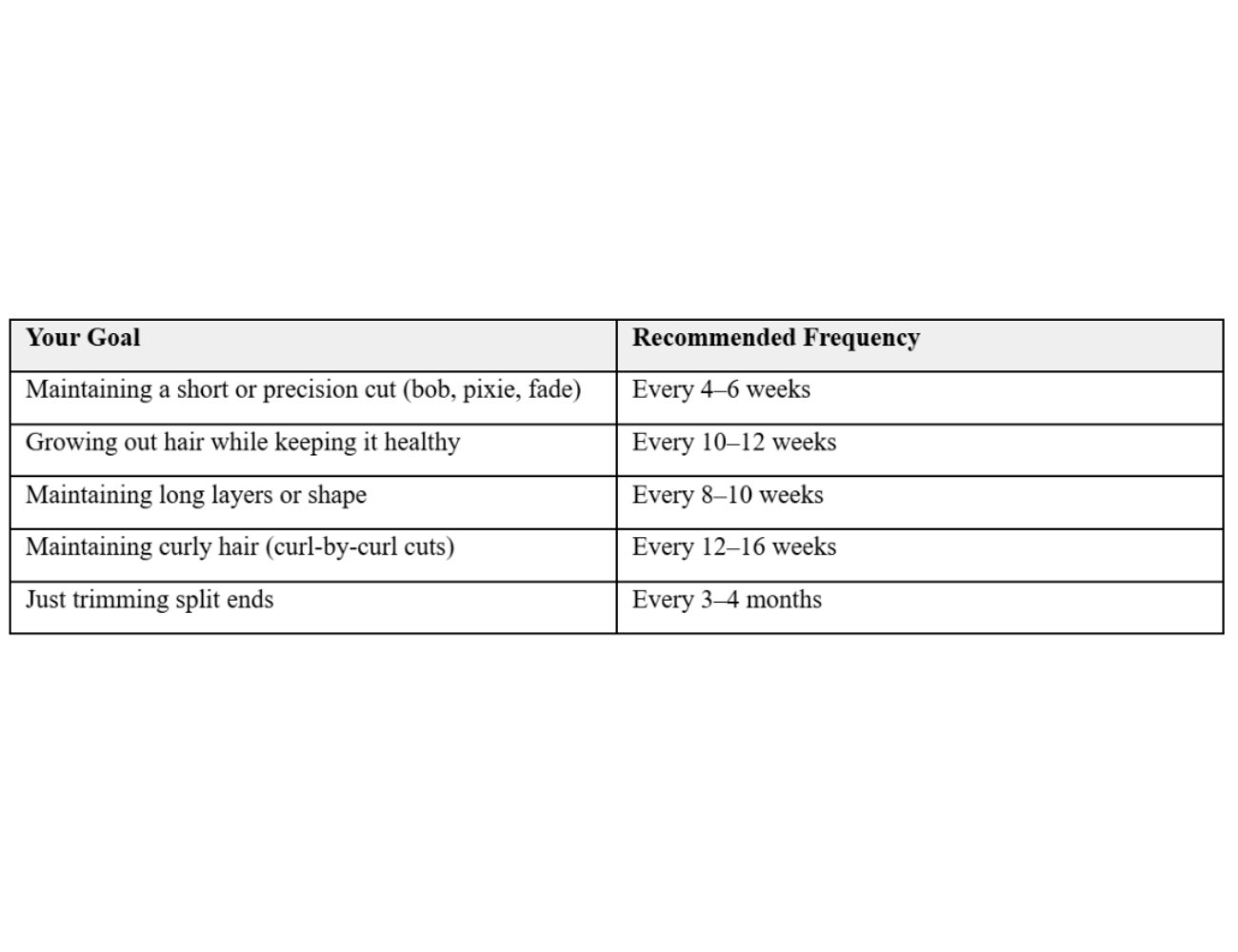
Why “Every 6 Weeks” Isn’t Universal
That guideline comes from short, structured cuts — bobs, pixies, and fades — where even a quarter-inch of growth changes the shape of the style. If your cut relies on a clean line (think a blunt bob or an angular fade), you’ll notice growth quickly and need more frequent visits.
Long hair behaves differently. Hair grows about half an inch per month, and on longer lengths, that growth is barely visible in the overall shape. Cutting long hair too often can actually work against length goals, trimming off progress before it’s necessary.
A Great Cut Buys You Time
Our philosophy at Educe is that a precision haircut should grow out beautifully — clients routinely tell us their cuts “basically style themselves” months in. That’s not luck; it’s training. Every haircutter at Educe completes the Fundamentals of Haircutting at Educe Academy, because you have to understand the rules first before you can break them.
Our precision haircutting artists — Phillip Rosado, Chelsea Ellen, Jaden Rosado, and Oriana Calderon — design every cut around your natural texture and growth pattern, which is exactly what stretches the time between visits.
How Hair Type Changes the Math
Fine, straight hair shows split ends and stringy-looking ends faster, so more frequent trims (every 6–8 weeks) tend to keep it looking healthier.
Thick or coarse hair can go longer between cuts since ends take longer to show visible damage.
Curly and coily hair often needs less frequent cutting — curls disguise split ends better than straight hair, and over-cutting can remove shape before curls have a chance to fully form. Many curly-hair clients do best on a 12–16 week cycle with a stylist trained in curl-specific cutting.
Color-treated or chemically treated hair tends to need more frequent trims, since coloring and lightening services can leave ends more prone to breakage.
Signs You’re Overdue, Regardless of the Calendar
- Ends look see-through or feathery when held up to light
- Hair tangles more than usual, especially at the ends
- Your style loses its shape halfway through the day
- Split ends are visible when hair is dry
Signs You Might Be Cutting Too Often
- You’re trimming length you’re actively trying to grow
- Your stylist is removing more than just split ends at each visit
- You haven’t noticed any real growth in 6+ months despite regular trims
FAQ
Does cutting hair make it grow faster? No — cutting doesn’t affect the rate hair grows from the scalp. Regular trims prevent breakage at the ends, which helps hair look like it’s growing faster because you’re not losing length to split ends.
Should I trim my hair while growing it out? Yes, but less frequently — every 10–12 weeks is usually enough to remove damage without sacrificing length.
What is a precision haircut? A precision haircut is built on exact sectioning, elevation, and line work — a technical foundation that makes the cut hold its shape as it grows. It’s the difference between a cut that looks great for two weeks and one that still falls into place months later.
How do I know what schedule is right for me? The most reliable way is a conversation with your stylist about your hair type, your styling routine, and your growth goals — it’s rarely one-size-fits-all. Every Educe stylist builds a personalized cut schedule as part of your consultation.
About the Author
Phillip Rosadois the co-founder of Educe Salon in Orlando, FL, alongside his wife and business partner Alicia Rosado. A Puerto Rican-born stylist with a career spanning three decades, Phillip has styled hair for top recording artists, competed as a national L’Oréal Professionnel finalist, and built Educe into one of Orlando’s leading luxury salons — with an in-house education program, Educe Academy, that trains the next generation of stylists. Learn More


